Healthy Living, Nutrition, Patient News
Fill your plate with a vibrant, colorful array of fruits and vegetables for a naturally delicious way to meet your daily requirement of vitamins, minerals, and nutrients. Plant foods contain natural compounds called phytonutrients, which may have anti-inflammatory benefits that can help reduce the risk of chronic diseases.
The US Department of Agriculture 2025–2030 Dietary Guidelines for Americans emphasizes prioritizing whole, healthy, and nutritious foods. Vegetables and fruits remain a cornerstone of that guidance. Research continues to show that a diet rich in produce can lower blood pressure, reduce the risk of heart disease and stroke, prevent some types of cancer, and have a positive effect on blood sugar.
- Keep fruit where you can see it. Place several ready-to-eat washed whole fruits in a bowl or store chopped colorful fruits in a glass bowl in the refrigerator to tempt a sweet tooth.
- Explore your local farmer’s market and choose something new. Variety and color are key to a healthy diet. On most days, try to get at least one serving from each of the following categories: dark green leafy vegetables; yellow or orange fruits and vegetables; red fruits and vegetables; legumes (beans) and peas; and citrus fruits.
- Skip potatoes as your main vegetable. Choose other vegetables that are packed with different nutrients and more slowly digested carbohydrates.
- Make it a meal. Try new recipes that include more vegetables.
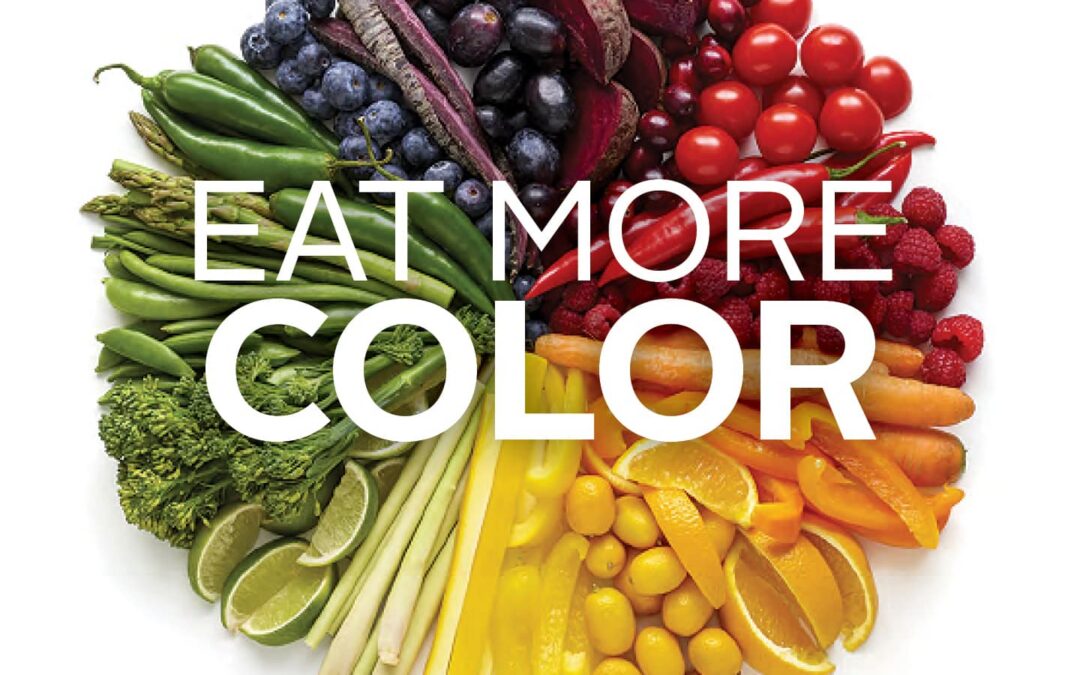
Every color has a contribution to make, aim for a few different ones each day and enjoy the entire spectrum.
Red and pink: These fruits and vegetables are an abundant source of the carotenoid lycopene, which may help balance free radical activity in the body, offering protection against prostate cancer and heart and lung disease. Research suggests that increased consumption of tomato-based products and other lycopene-containing foods may reduce the occurrence of prostate cancer, with cooked tomato products potentially offering enhanced benefits.
beet, cherry, cranberry, pink grapefruit, pomegranate, radicchio, red radish, red onion, persimmon, pink guava, blood orange, raspberries, red dragon fruit, red apple, red grape, red pepper, red potato, rhubarb, strawberries, tomato, watermelon
Orange and yellow: Enjoy an extra boost of beta-cryptoxanthin, which supports intracellular communication and may help prevent heart disease. Orange and yellow fruits and vegetables also contain vitamin C and carotenoids, including beta-carotene, which is associated with promoting healthy vision and cell growth. The current guidelines recommend eating a variety of colorful produce to ensure a diversity of beneficial plant chemicals.
acorn squash, butternut squash, apricot, cantaloupe, carrot, grapefruit, lemon, mango, nectarine, orange, orange pepper, papaya, peach, pineapple, pumpkin, summer squash, sweet potato, tangerine, yam, yellow apple, yellow pepper, yellow squash, pomelo, turmeric root, star fruit
Green: These are some of the healthiest fruits and vegetables, rich in chemicals like sulforaphane, isothiocyanates, and indoles, which may inhibit the action of carcinogens. Dark green and leafy vegetables have the highest concentration of both antioxidants and fiber. They’re also packed with potassium, lutein, isoflavones, and vitamin K, which can be important for vision, bone, and blood health.
artichoke, asparagus, avocado, bok choy, broccoli, Brussels sprouts, celery, collard greens, cucumber, green bean, green cabbage, green grape, green onion, green pepper, kale, kiwi, leek, lime, mustard green, okra, pear, peas, romaine lettuce, snow peas, spinach, sugar snap peas, watercress, zucchini, seaweed, broccolini, matcha, Swiss chard, arugula, edamame, alfalfa sprouts and green herbs (mint, rosemary, sage, thyme and basil).
Blue and purple: Anthocyanins are powerful antioxidants that may help delay cellular aging, block the formation of blood clots, and boost urinary tract health.
blackberries, blueberries, black currants, dates, eggplant, Concord grapes, plum, prunes, purple fig, raisins, beetroot, purple cabbage, elderberries
White: These foods may not be as brightly hued as the others, but they shine with valuable phytonutrients. These include the potentially anti-tumor properties of allicin and quercetin, found in garlic and onions; the healthy compound sulforaphane in the cruciferous cauliflower; and immune-supporting selenium in mushrooms.
banana, bamboo shoots, cauliflower, fennel, garlic, Jerusalem artichoke, jicama, kohlrabi, leeks, lychees, mushrooms, onion, parsnips, potato, shallots, white beans (cannellini, navy beans, lima beans, soybeans), white peaches and daikon radish.
Sources: dietaryguidelines.gov; nutritionsource.hsph.harvard.edu